Tony Okrongly · encaustic

The Atelier · Book I · Chapter 1

Your work is waiting: Stratum VII →

Know your materials

Before a professional paints, they know what they are painting with. Not from a label — from their own hands, their own tests, their own failures pinned to the studio wall.

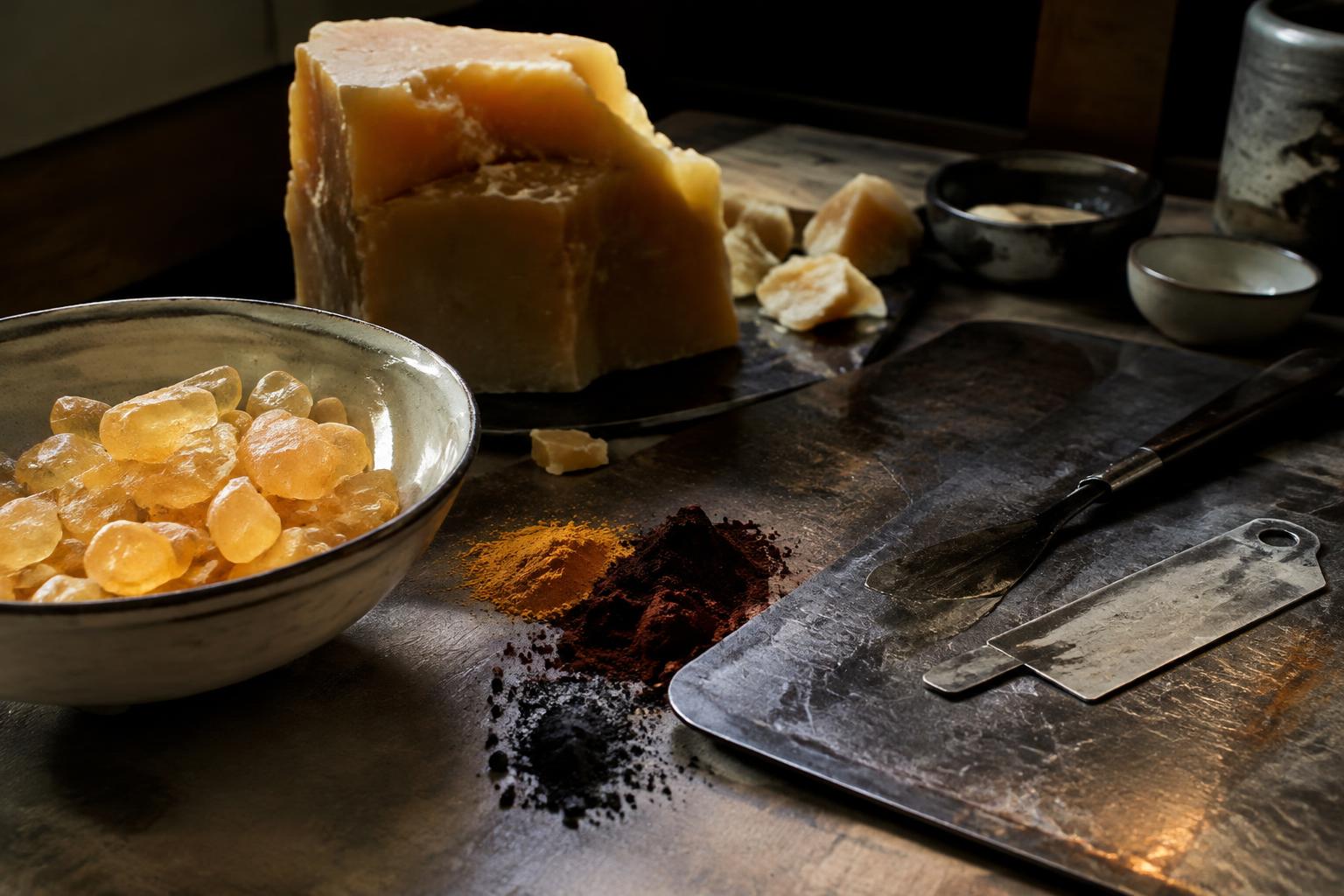
Beeswax, damar resin, pigments and tools

Plate ICappings beeswax, Batavia damar tears, raw pigment, scraper and palette knife on the hot palette.

When I was learning the basics of art in college I was mixing my own ceramic glazes and testing them. One blue I was using kept pitting — forming small holes — during firing. My professor didn't know why. We drove together to a working potter, someone who touches the materials in production every day. He looked at my piece and immediately said, "It has too much cobalt in it." I said, "It can't — I got the recipe directly from an authoritative book." He said, "It has too much cobalt in it."

Later that week I visited the publisher's web page for that book. There were two corrections to the book on the site. One said the recipe I used had misplaced a decimal point. I was using ten times too much cobalt.

The value of knowing your materials intimately comes from working with them, developing a feel for them, and limiting your practice to as few materials as possible — known as intimately as possible.

i. Wax

Beeswax is not one thing. Cappings wax — the seal bees lay over finished honey — is the purest. You will learn to know it by smell, by the way it cuts, by how it clouds when it cools too fast. You will learn to bleach it in the sun rather than with chemicals. What you put into the wax becomes part of the painting. Purity is worth testing, not merely trusting.

How do you know your wax is real beeswax? Much of what suppliers sell as “beeswax” is cut with paraffin, petroleum wax, or worse. So how do you know? In Good Will Hunting, Robin Williams’ character says, “I bet you can’t tell me what it smells like in the Sistine Chapel.” The same is true of wax: real beeswax smells of honey and pollen. If it smells of nothing, it isn’t what it claims to be. You cannot fake the smell of a real, natural thing.

ii. Resin

Damar hardens the wax, raises its melting point, and gives the surface its depth. Too little and the painting stays soft; too much and it turns brittle. The ratio is not a recipe you copy. It is a test you run.

Damar resin is produced by a tree, much like maple syrup. The best damar comes from Indonesia and Malaysia. I could buy mine from the big art distributors. I don't. To hold the exact same quality over years, I do what people who make scotch for generations do: I source from the same geography. There is nothing wrong with buying damar from a trusted supplier — but I import mine directly from one producer in Malaysia, generally enough to last the studio for years. I sometimes sell the extra to other artists who want to try it.

This is the same process encaustic painters have used for nearly 2,000 years. The more you connect to that history, the more connected you are to the materials and how you use them.

iii. Pigment

All art requires pigment, whether simple charcoal, stains, or ground pigments. The different media — watercolor, oil, acrylic, encaustic — use the same pigments. They just mix them into different carriers. The beautiful thing about encaustic painting is that we as artists can and should mix our own. This gives our studio its own breath, its own captive soul. Not a bought thing — a made thing, no different than the Renaissance artists who ground and mixed their own oil paints before paints came in tubes.

All pigments come from the earth. The less processing, the better. A professional studio has the right equipment to safely handle even the most difficult pigments. Once encapsulated into the medium, all professional pigments are safe, protected from the air, and will last hundreds of years, worry free, with the same vibrance as day one.

How is it that oil paintings crack and fade over time and encaustic pieces don't? The answer is that the other media continue to "dry" over time, losing their carriers. Encaustic never changes. Even though it feels hard to the touch, it is still alive. That is how paintings from 1,900 years ago still have the same vibrancy today.

Read the supplier’s safety data. Keep dry pigment out of the air, and use appropriate protection and ventilation. Intimacy with a material begins with respect for it.

“What you need to know about the next piece is contained in the last piece.”
Bayles & Orland · Art & Fear

iv. The color sheet

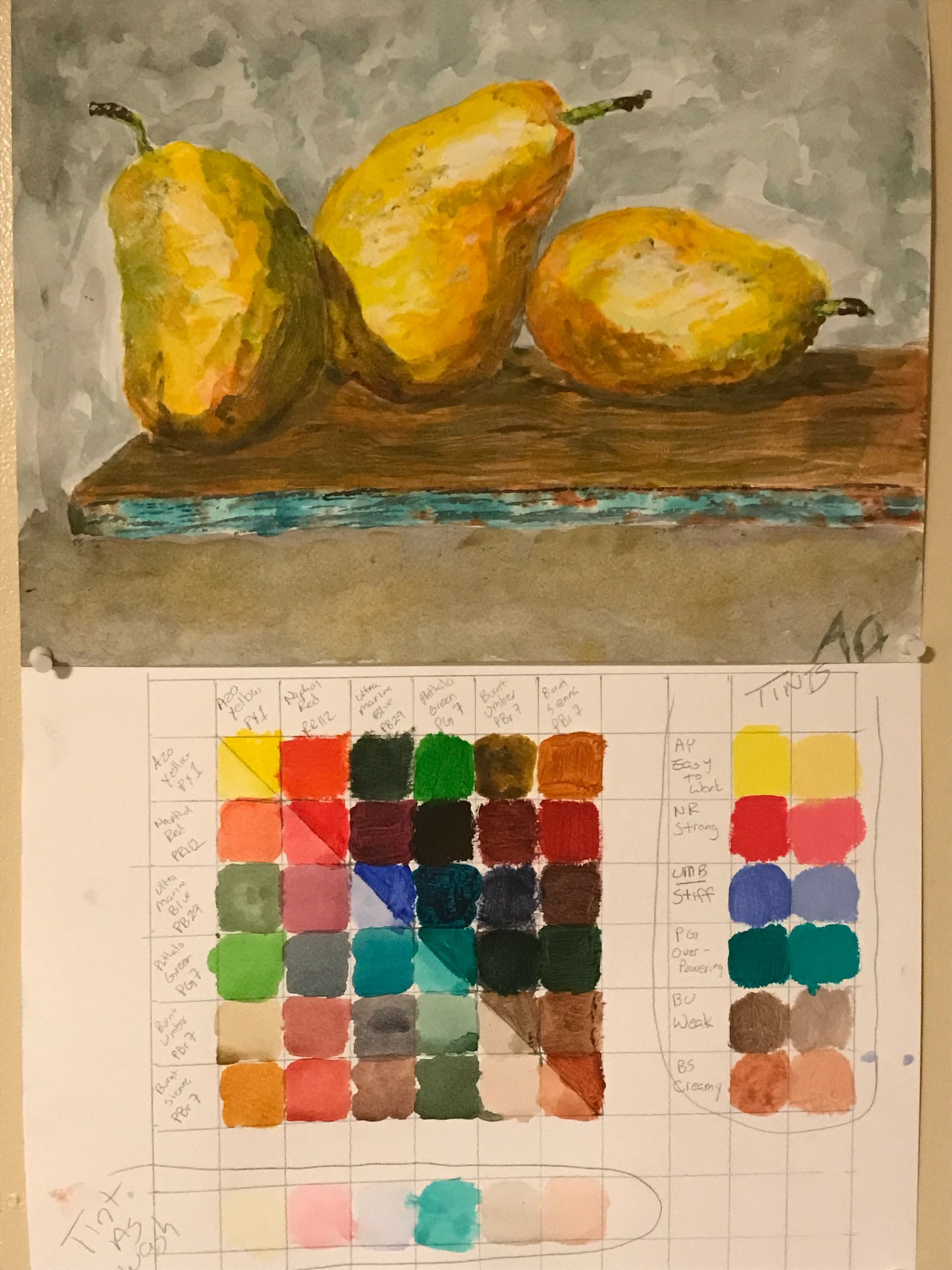
Watercolor study of three pears pinned above a hand-drawn color mixing chart

Plate IIA pear study above its own color sheet — every pigment against every other, tints below, pinned to the studio wall.

When I was studying watercolors I learned how to make color sheets. My instructor taught me to spend hours, even days with my paints — experimenting, making systematic charts, mixing every single color with every other color in a very organized way.

Everyone knows that red and blue make purple. But what hue, what temperature, what atmosphere does this blue and this red make? And what happens when you mix this same blue with that red instead? How does it affect the transparency, the opacity, the temperature?

During pottery training I learned to make samples of the same glaze and fire it at different temperatures, to see how firing temp and time changed the result. Encaustic painting is no different. A hobbyist takes paints and makes a painting. A professional knows the paints. The only way to know them is to work with them for days before you ever apply them to a work.

Look closely at the sheet on the right of the study above. It is from years ago, when a new set of Conte encaustic paints entered the studio. In the margins, in pencil: AY — easy to work. NR — strong. UMB — stiff. PG — overpowering. BU — weak. BS — creamy. Each pigment got its character noted the way you would note a person's.

Art is the act of playing with materials. Discovery through experimentation. This is the art of art — the art of forming relationships with the medium.

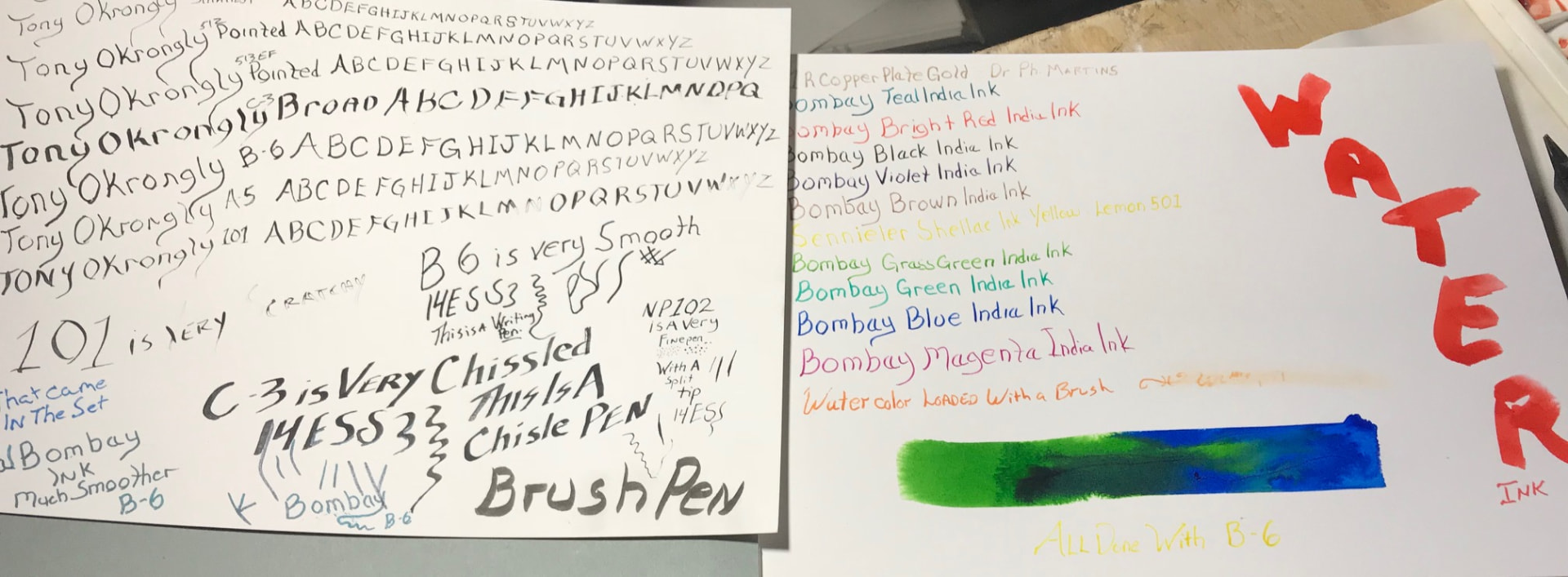
The habit never leaves you. Every new material that enters the studio — a pen, an ink, a pigment — gets the same interrogation before it is trusted near a painting.

  1. 01Choose a limited palette
  2. 02Mix each pair at 1:1, 1:3, 3:1
  3. 03Lay thin, medium, thick
  4. 04Fuse, label, pin to the wall
  5. 05Live with it for a week
Hand-lettered test sheets trying out calligraphy pens and India inks

Plate IIIThe same discipline applied to pen and ink — every nib, every ink, tested and annotated before use.

The Atelier · Book I · Chapter 2

Spirit & philosophy

That from which we allow ourselves to be influenced — that to which we express as our own. Be careful what you expose yourself to as an artist.

i. Choice

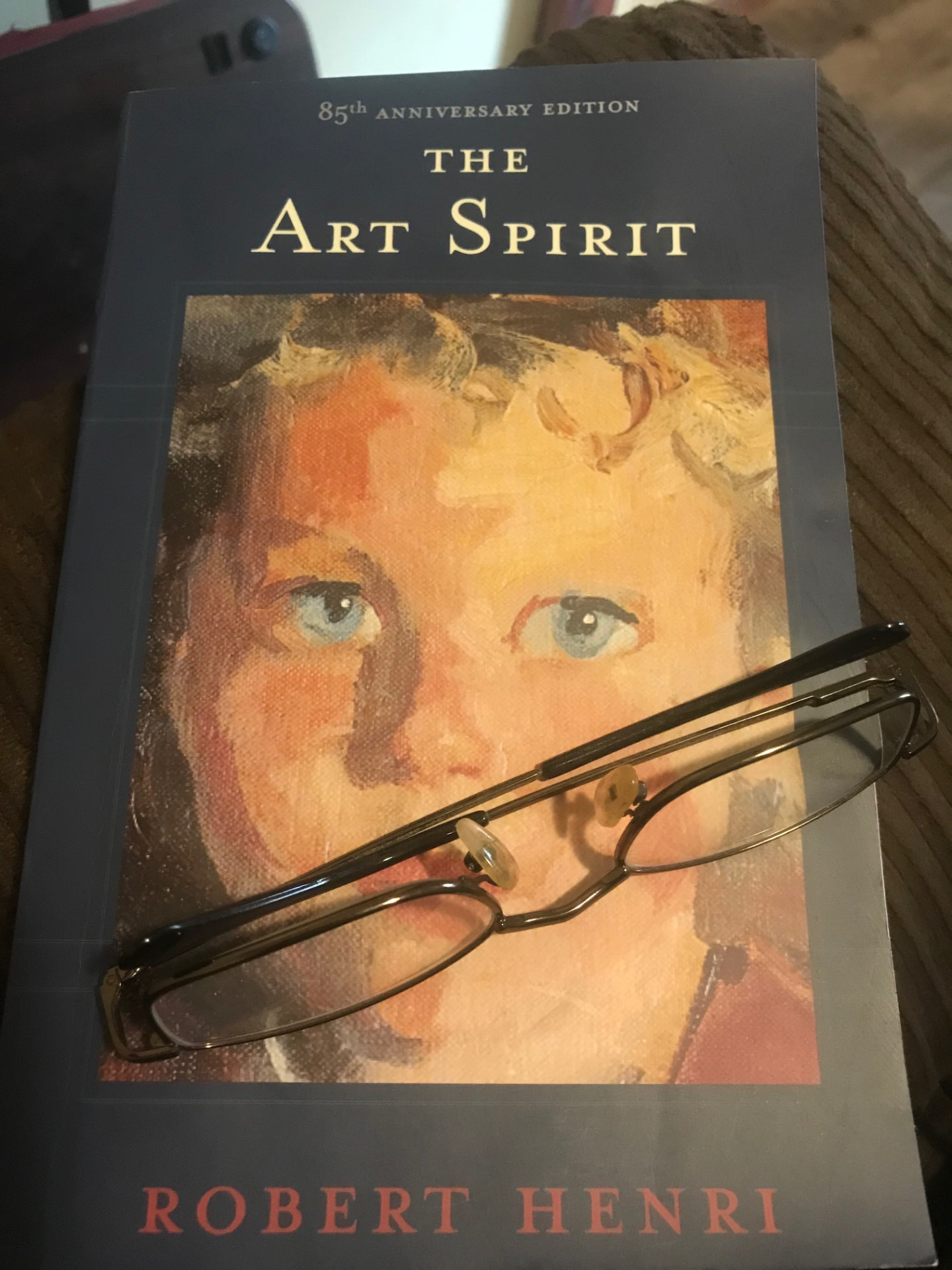
Two of my favorite art books don't teach a single technique or skill. One is The Art Spirit by Robert Henri — a book that was never written by the author. It is a collection of notes from a student. She collected and compiled his lectures, notes, talks, and letters into a book that doesn't teach art. It teaches choice.

That's what fine art is — choice. Technique is a thing: learn, practice, apply. It means little without choice. Fine art starts with fine choices. My pottery professor, on my first day of class, said something that has influenced me ever since: "Don't let your first idea be your only idea."

The Art Spirit by Robert Henri, 85th anniversary edition, with reading glasses resting on the cover

Plate IVThe Art Spirit — a book compiled from a student's notes, never written by its author. It teaches choice.

ii. Volume

The second book is Art & Fear by David Bayles and Ted Orland. Like the first, it doesn't teach a single technique. What it taught me is that there is no such thing as talent. All art is application and process.

It also taught me that great art is the remainder of a great deal of art. Volume and practice is the work of an artist. Choices made consistently and applied carefully most often make pieces — and sometimes make art.

No artist can choose to make one piece of art. An artist chooses to engage in a process that sometimes makes art.
The life of a serious artist

The chapter on materials ended with this same book's line: what you need to know about the next piece is contained in the last piece. That is not encouragement. It is instruction — make the next one.

iii. Effect

Art isn't an object, a thing, a work, a result — real art is an effect. If a poem doesn't affect, it's just clever rhyme and repetitive meter. A concert pianist didn't build the piano or write the piece, but the difference in effect is what separates an artist from a "player."

What Henri taught me most was this: know what drew you to the subject. Identify what you love about it. Then paint that — and when you are done painting that, stop.

iv. Choices and application

Choices and application. That is all the artist controls. What to make, what to leave out, how far to push it, which material, which ground, which moment to stop — every one of those is decided in the studio by the person doing the work.

Whether the result creates an effect in the viewer is beyond our control. The work leaves the studio and belongs to the room it hangs in and the person standing in it. That is not a reason to work carelessly. It is the reason to work carefully in the only place you have any authority: the choices, and how carefully they are applied.

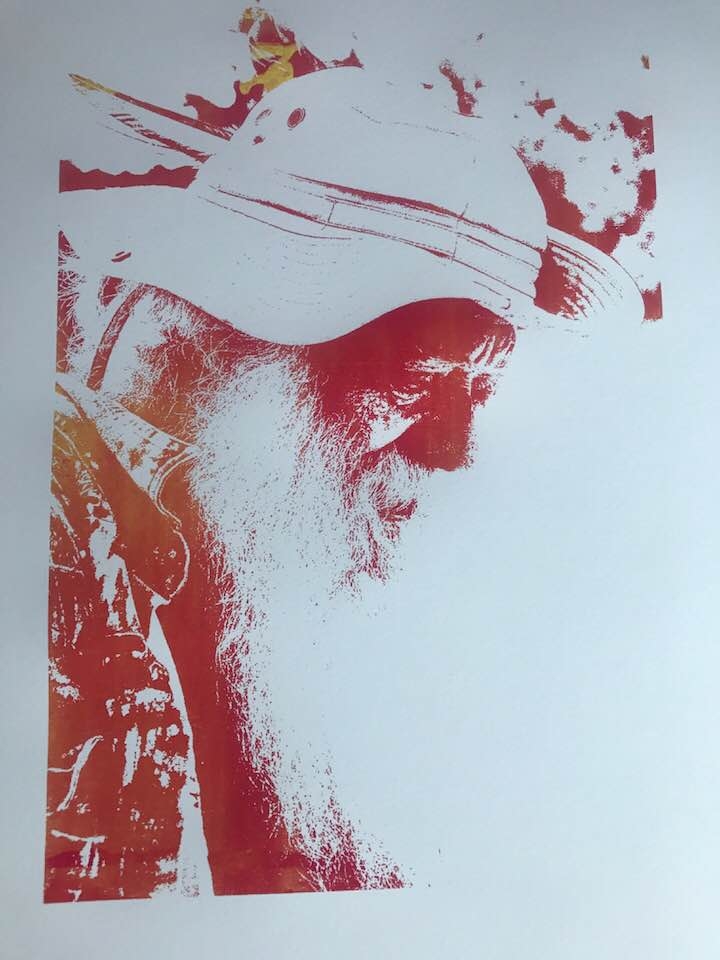
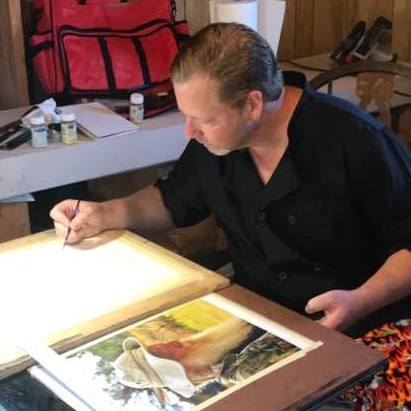
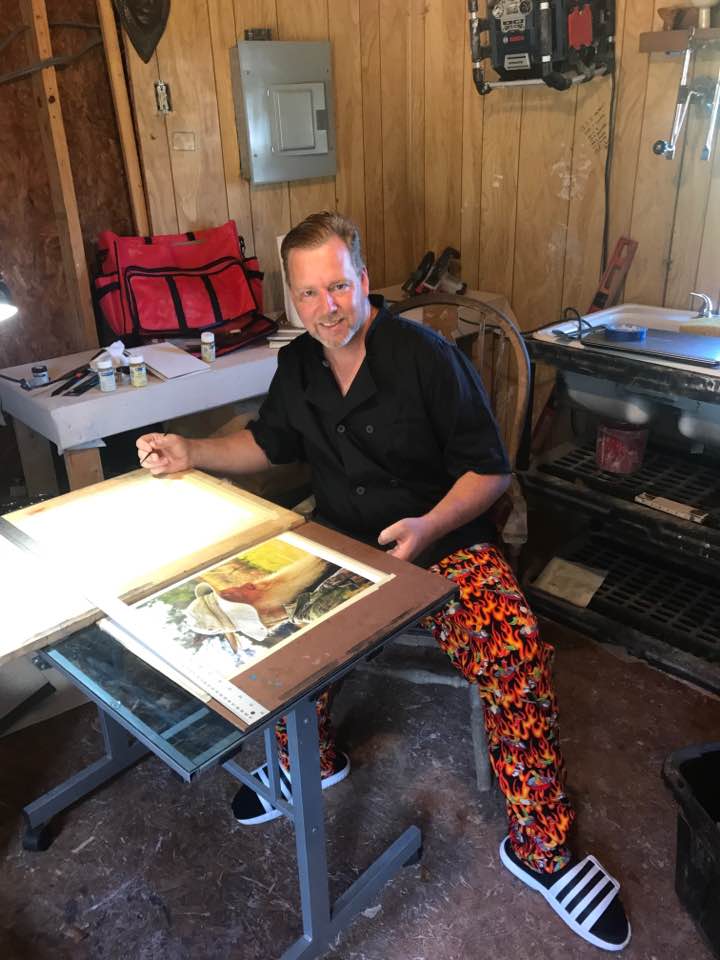
Below is Mike, pulled in warm ink — and me at the table in 2016, choosing.

High-contrast profile portrait of Mike, a bearded man in a brimmed hat, printed in warm red-to-orange ink on white paper

Plate VIIMike — the profile pulled in warm ink. Everything before this was a choice. Everything after it is out of my hands.

Tony Okrongly seated at a drafting table in 2016, fine tool in hand above a blank surface, Mike's portrait resting below

Plate VIIIApplication — at the table in 2016. The tool held over the surface, Mike's portrait within reach, the next choice still open.

Tony Okrongly at the drafting table in his 2016 studio: plywood walls, hand tools, a red tool bag and a utility sink

Plate IXThe room where the choices get made — plywood, tools, a sink for the mess. Nothing else is required.

v. Two pears

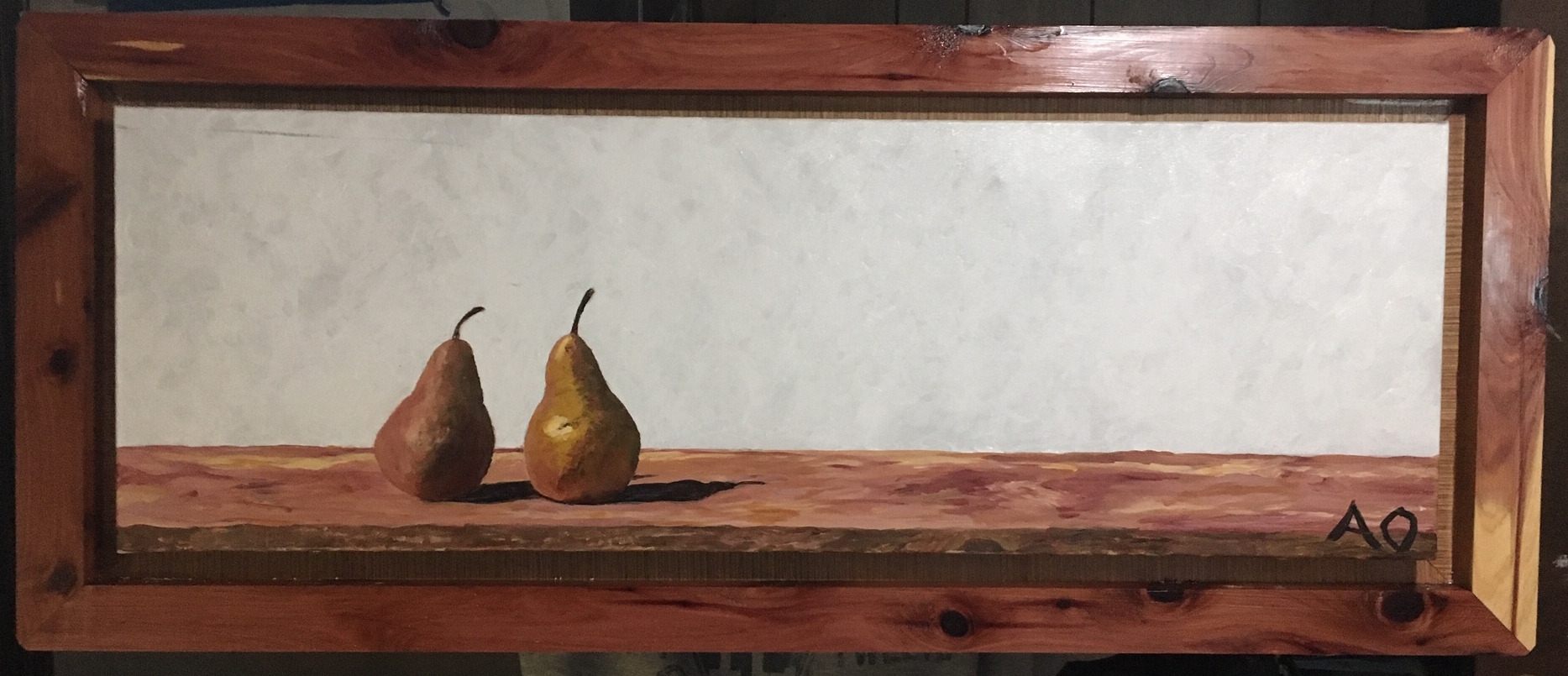
An early piece shows what this philosophy does. The assignment: paint a still life. My first idea — pears. But I didn't let my first idea be my only idea, and I knew that to have any chance at making anything close to art, the effect was more important than the subject.

So instead of painting a pear, I painted two pears in a relationship, moving through space and time together. One reviewer said, "The open space makes me feel uncomfortable." When I heard that, my heart skipped. The work had created an effect.

Two pears — one dark, one golden — standing together on a warm ground against open white space, in a hand-made cedar frame

Plate VTwo pears in a relationship, moving through space and time together. The open space is the subject.

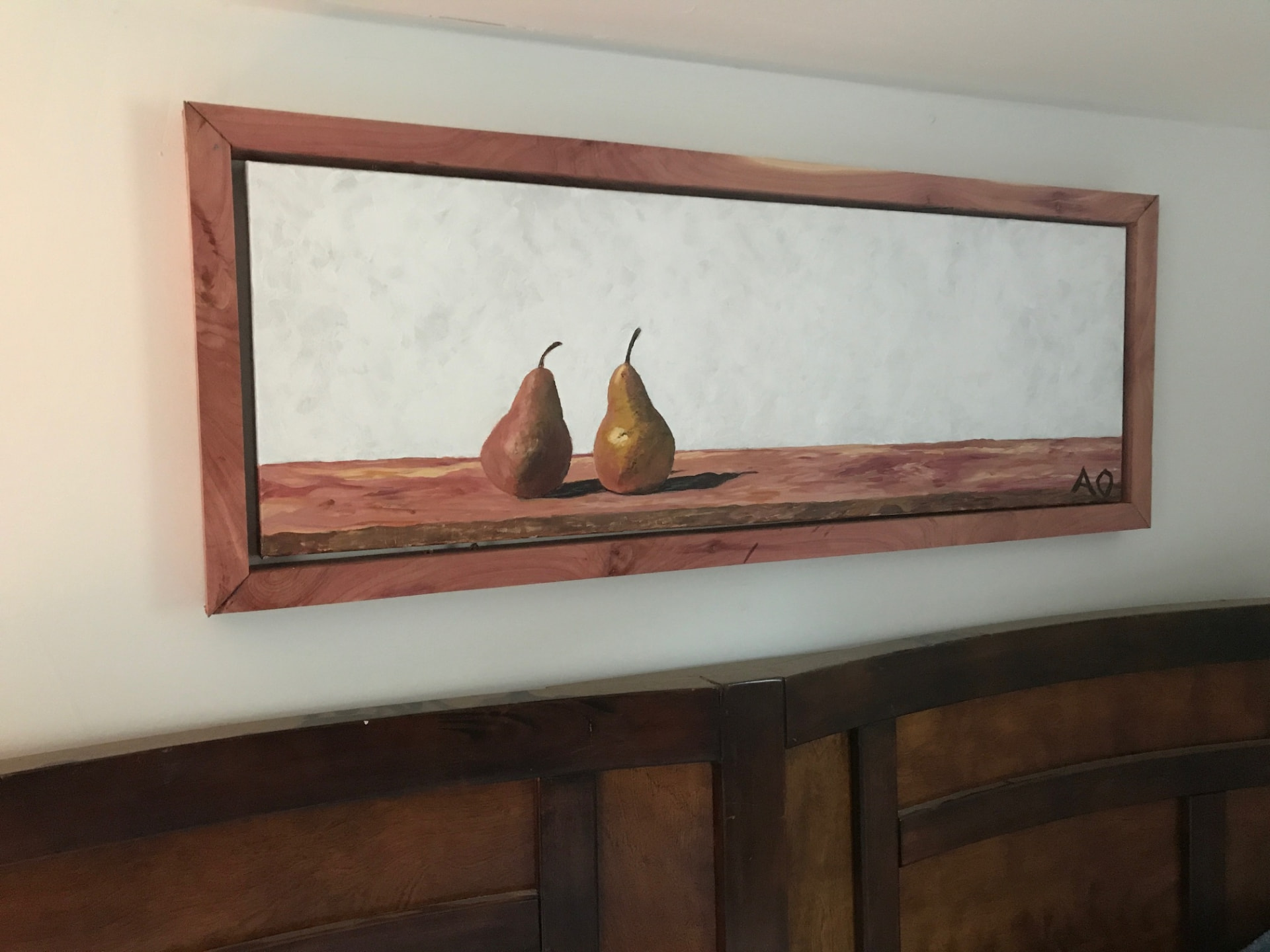
A work that creates an effect doesn't stop at the edge of its frame. Hung in a room, it changes the room — the open space on the panel starts a conversation with the open space of the wall, and the people standing in it.

That is the standard this atelier holds: not objects, but effects. Not decoration, but presence.

The two pears painting hanging above a wooden sideboard in a living room

Plate VIThe effect, at home — the painting completes the room in a way nothing else can.

The Atelier · Book I · Chapter 3

Getting better

The siren song in art is to "improve." Do not be drawn by it if you don't know the purpose first.

i. The siren song

The critic inside says, "This is a little off." "Those brush strokes could be cleaner."The reviewer says "this part could be better" or "that part shows weakness." The song has one line, and it is always the same line: get technically better.

Do not be drawn by the siren song to "improve" your technique if you don't know the purpose first. Technique without purpose is decoration with better edges.

ii. You had the photo

I have seen paintings that look exactly like the photograph they were painted from. My question when I see one is: "Why did you paint it? You had the photo."

The art world had to look at itself when the camera first appeared and ask what now? If a camera can capture, why paint? My answer is to refer you back to the previous section — the image and the result for Mike. The image showed a scene. The result showed a single thought, a single emotion, and stripped away all the noise. That's the choice.

iii. Intent

The siren song says "get technically better." Henri would say the brush carries your intent, and that intent makes all the difference. Let your intent be to build a relationship, through the medium, to the idea.

iv. The mistakes that don't matter

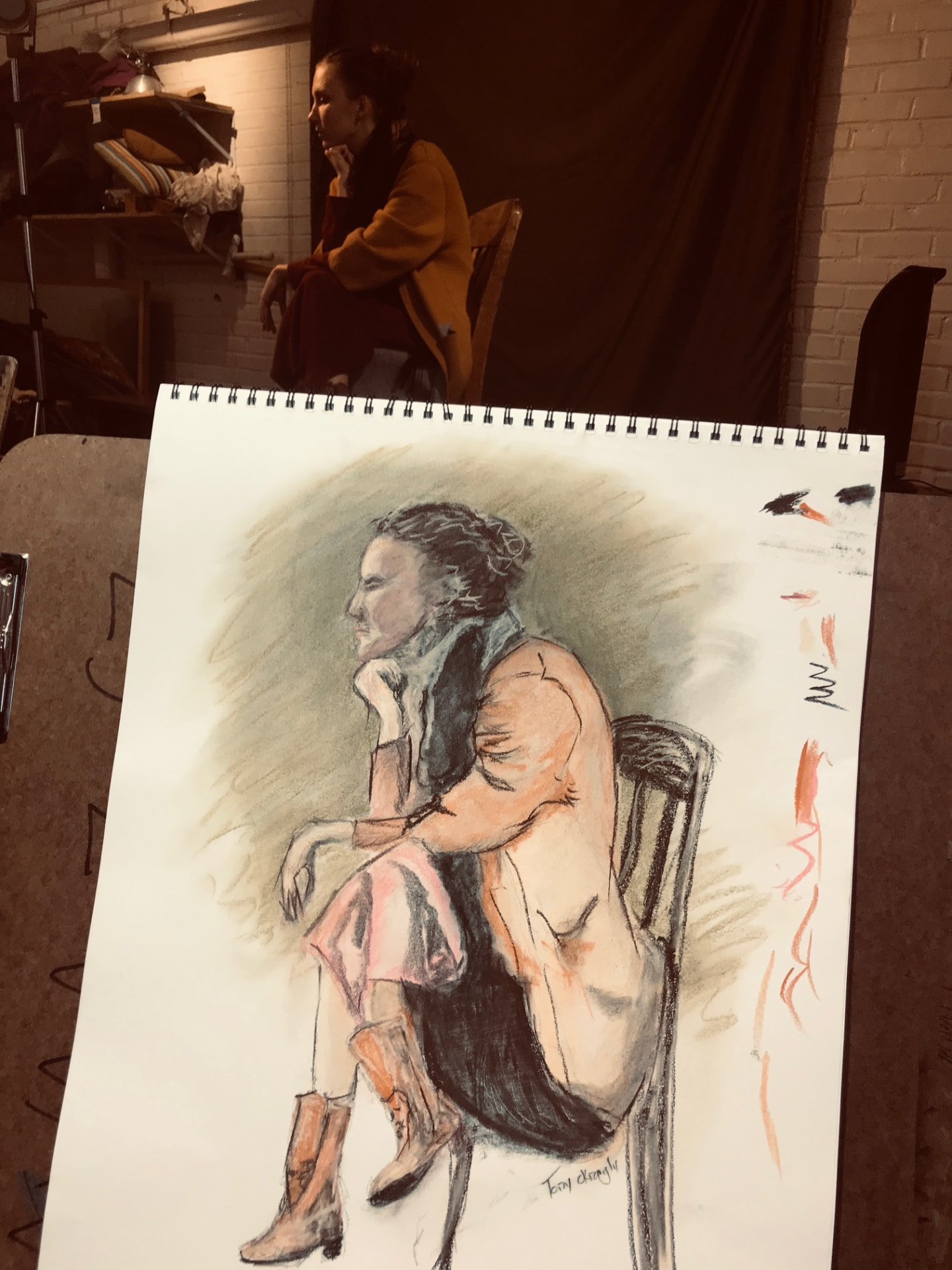
I can name every mistake in this life drawing. The proportion that drifted, the edge that got away from me, the value I should have pushed further. None of them matter.

A pianist practices a piece a hundred times or more — all of them wrong in some way — before she performs a piece that still isn't perfect. The only difference is the music evaporates. The artist's pieces, all of them, persist.

Charcoal and pastel life drawing of a seated woman on a drawing board, the live model posing behind it in the studio

Plate XIThe drawing and the model — every flaw still on the page, and still the better thing for it.

In the life drawing above, the "mistake" isn't a color or a line or a mislaid mark. The drawing shows everything faithfully to my mind: the thinness of her, the blocks of color she wears, the open nature of her style. The mistake is the expression. She looks stern and sharp-faced when she should look at peace and serene.

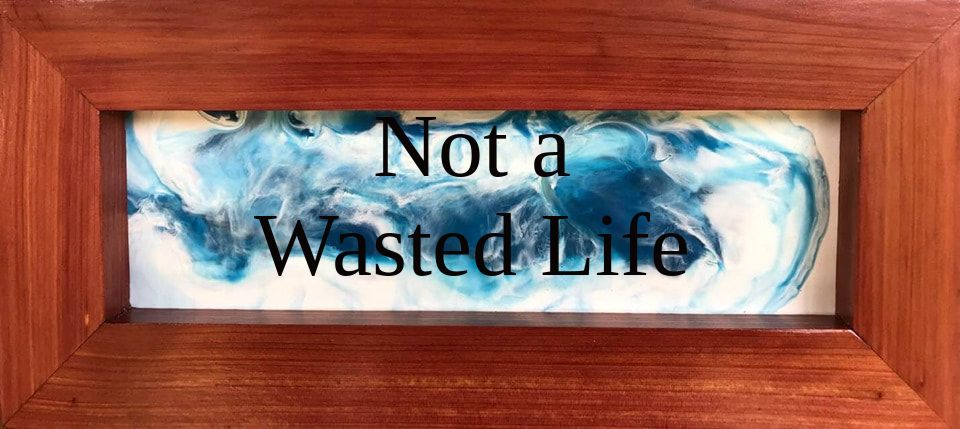
v. Not a wasted life

Even if every piece is full of flaws, it is not a wasted life. Of all the instruction there is for making art from any materials, there is only one.

Just add human.
The only instruction
Framed fluid painting in ocean blues and whites with the words 'Not a Wasted Life' across the surface

Plate XNot a wasted life — the flaws, the years, the poured color, all of it still standing in the room.

The chapter in one line

Getting "better" is never the goal. The goal is to make better choices, to create stronger connections with the materials and the processes. The rest happens with volume.

The Atelier · Book I · Chapter 4

Improving the artist

Improving is different from "getting better." The work isn't what improves. The person who makes it does — by choosing what is allowed to reach them.

i. Not the same song

I mproving is different from "getting better." The siren song in the last chapter wanted a better hand. This one wants a better set of influences.

Remember the line the previous chapter began with: "That from which we allow ourselves to be influenced." You don't get to choose your talent — there isn't any. You do get to choose what you expose yourself to. Surround yourself with influences that affect your choices as an artist, because your choices are the only thing you actually own.

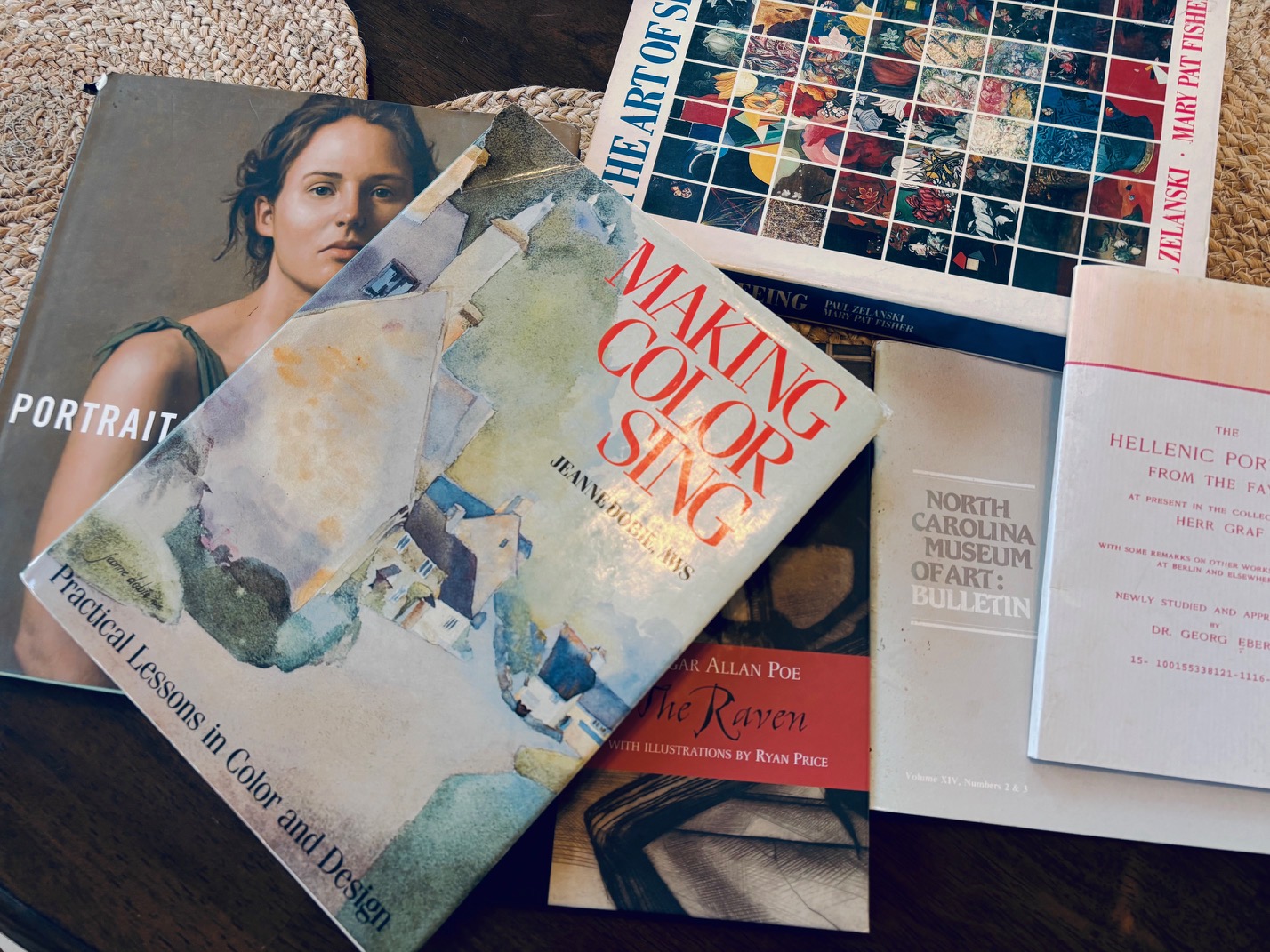
ii. Making Color Sing

I strongly recommend Making Color Sing by Jeanne Dobie. I love the book so much that I accidentally bought two copies.

It is subtitled "practical lessons in color and design," and it is that. But what it really hands you is a way of noticing — how color sings instead of simply sitting on the surface. That is the kind of influence worth inviting into a studio: the kind that changes what you see, not the kind that hands you a recipe.

A fan of books on a studio table: Making Color Sing by Jeanne Dobie in front, with a portrait book, The Art of Seeing, The Raven, a museum bulletin, and a nineteenth-century volume on the Hellenic portraits of the Fayum behind it

Plate XIIThe stack that made the eye — Making Color Sing on top, and everything else I have let near it.

Notice that it isn't all art books. Poe is in there. A museum bulletin. A nineteenth-century study of the Hellenic portraits of the Fayum — the same faces that prove this medium can still sing nineteen hundred years later. Influence doesn't announce itself as instruction. It arrives as a pile of things you kept.

iii. Too many minds

I like movies, and movies are influence too. In The Last Samurai, Tom Cruise's character is trying to learn to fight like a samurai and is losing — over and over. A child walks up to him and says, in broken English, "Too many minds."

Tom's character doesn't understand. So the child explains:

"You mind your enemy, you mind yourself, you mind those watching... too many minds. Have one mind."
The child, in broken English

That is the whole problem of the studio, said by a child in five sentences. You mind the market. You mind the critic. You mind the other artists, and the algorithm, and the person who will one day hang the thing over a fireplace. Too many minds.

iv. One mind

Fine art has one mind. Your own. Not your audience, not your critics, not other artists.

We allow ideas to influence us — that is the entire point of the stack on the table — but in the end we have to follow one mind. The influences do their work before the painting. In front of the surface, only one person is allowed in the room.

v. Praise

Finally, don't take praise seriously. It is just as flawed as critique. Your friends and family are surprised by the fact that something was made, and excited for you that you made it. That is love, and it is worth having — but it is not the same as knowing what makes art.

Even after saying to mind yourself, know this: fine art requires craft, vision, understanding, and choices. Don't ever let nice people saying nice things stagnate your path to real work — work that has a real effect.

The chapter in one line

Choose your influences on purpose, then follow one mind — your own.

The Atelier · Post Note

What affect does AI have?

Artists are concerned about what AI will and will not do. Is it stealing their images? If anyone can prompt a machine into making pictures, what does that mean? Should I use it to create studies?

i. Ten hours a day

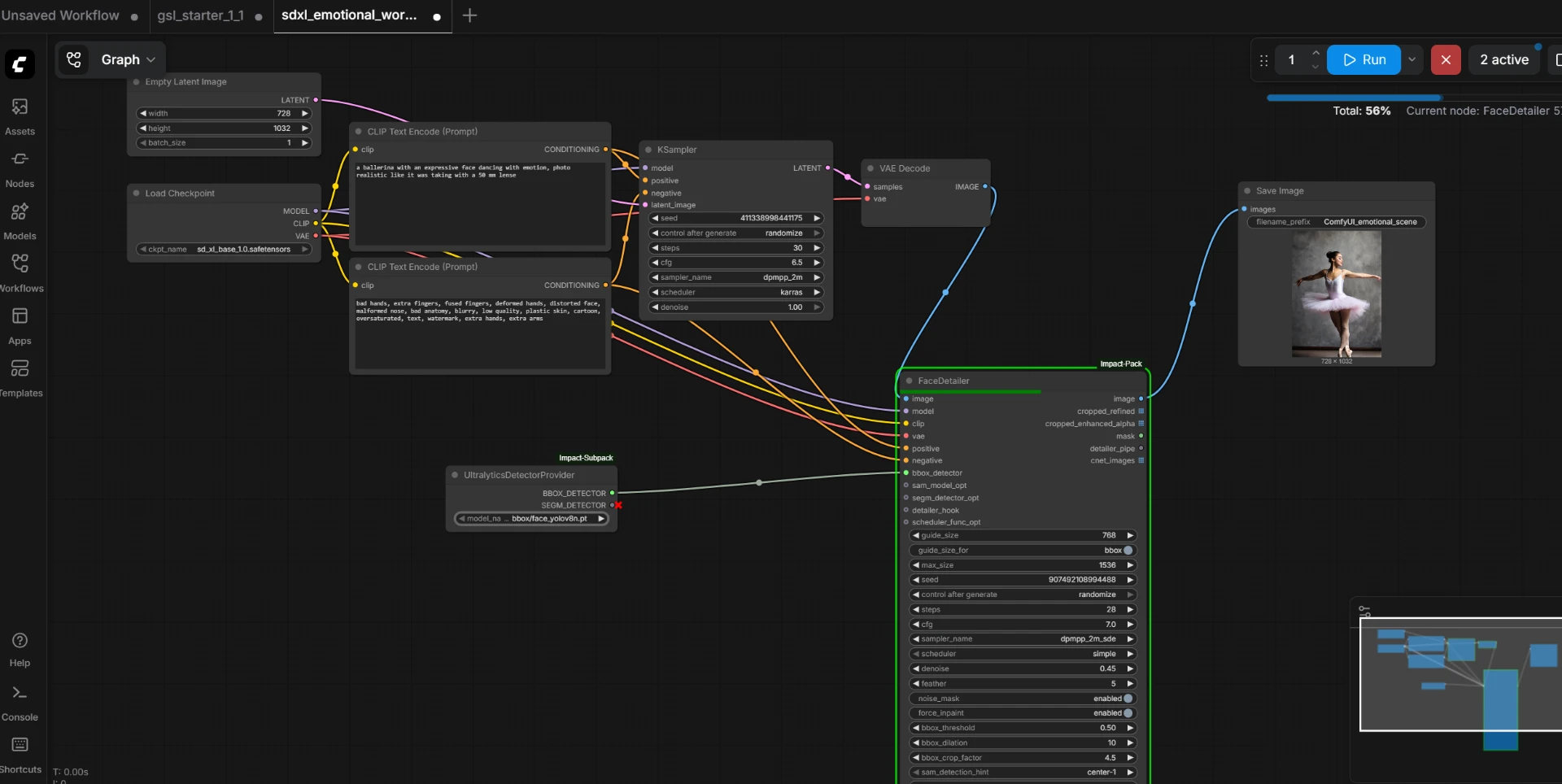
I should say where I stand. Outside of my encaustic work, I work with AI literally ten hours a day or more. All of them. You can prompt an AI to make images, or you can build your own models. I have done both.

So this is not a note written from a distance, by someone afraid of a thing he has never touched. It is written from inside the machine room.

A node-based AI image workflow in the studio, mid-render

Plate XIIIThe machine room — one of my own workflows, mid-render.

ii. The camera, again

The issue with AI is no different than the issue when the camera was invented. The art world had to look at itself and ask "what now?" — and the answer is the same answer it found then, in You had the photo. A machine can capture an image. It was never the image that made the art.

As an encaustic artist I am less worried than most. AI can make digital images that look like encaustic art, but it cannot put wax down with pigment. It cannot heat the surface, cannot fuse the layers, cannot leave the mark of a hand that was actually there. And it certainly cannot make the choices that I make.

iii. Just add human

I do use AI to create ideas that can become art. A study, a direction, a form to react to — the way you react to a model or a photograph. But an idea is not the work. Art has one ingredient, and it is the same ingredient it has always had: just add human.

What that means with AI is for each human to decide.

iv. A model on request

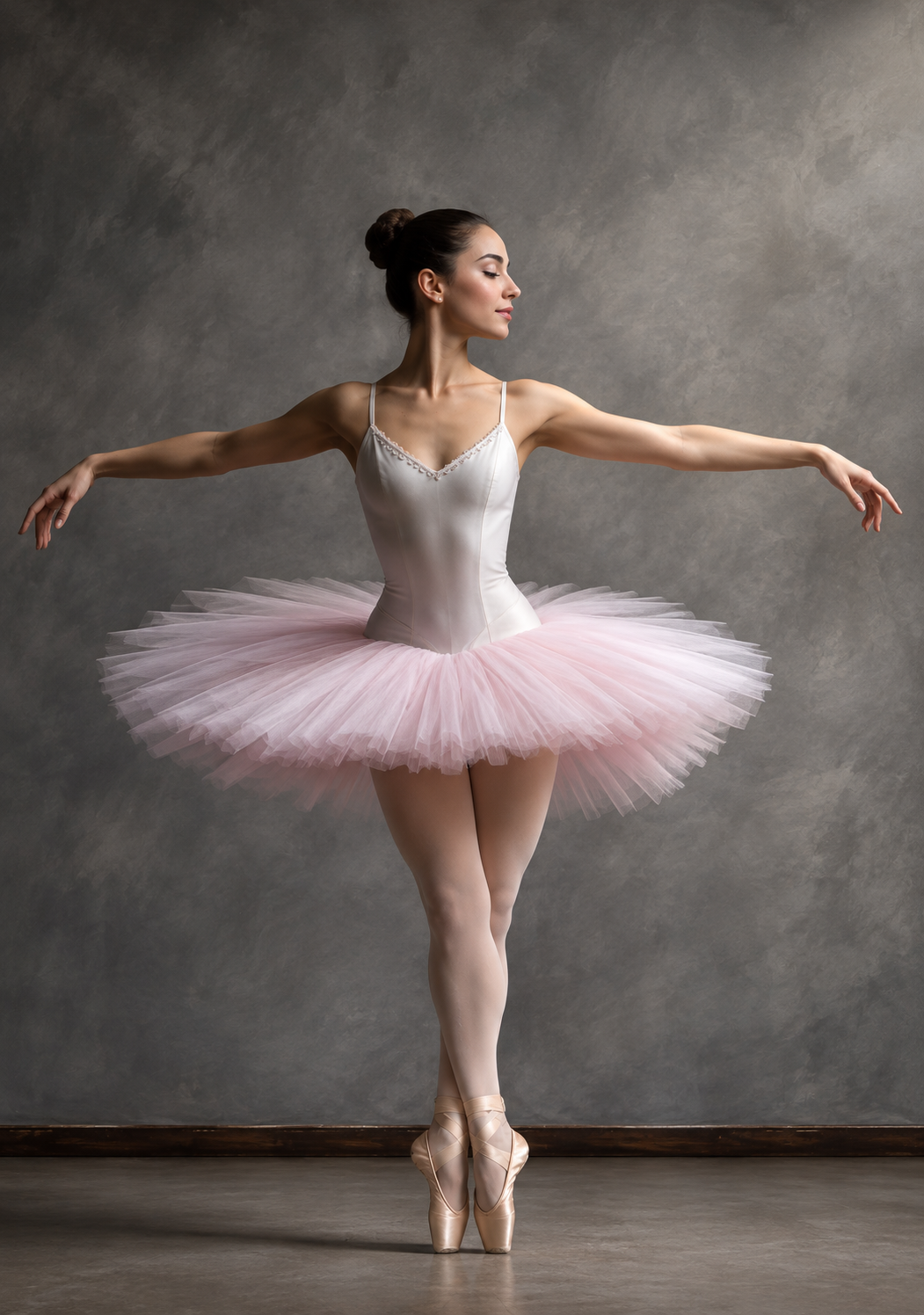
I use AI's for models and design ideas. Here's an example.

A ballerina in a soft blush tutu standing en pointe with her arms extended, in a studio with a gray wall

Plate XIVThe model. Made by ChatGPT, November 2026 — I don't know a ballerina, and the pose I wanted lasts four seconds in the air.

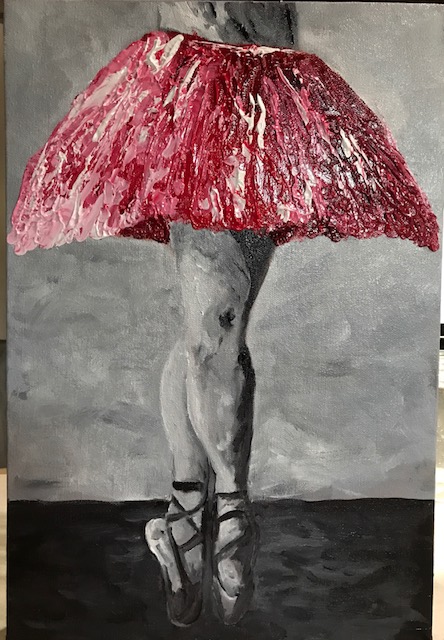
An impasto painting of a ballerina's crossed feet in pointe shoes beneath a pink and crimson tutu, the legs painted in grayscale

Plate XVThe painting that came from the model — a 14 × 20-inch acrylic by Tony Okrongly. The form was borrowed; the choices were not.

The note in one line

The machine can make the image. Only the human can make it art.

Stratum VII

Where this leads

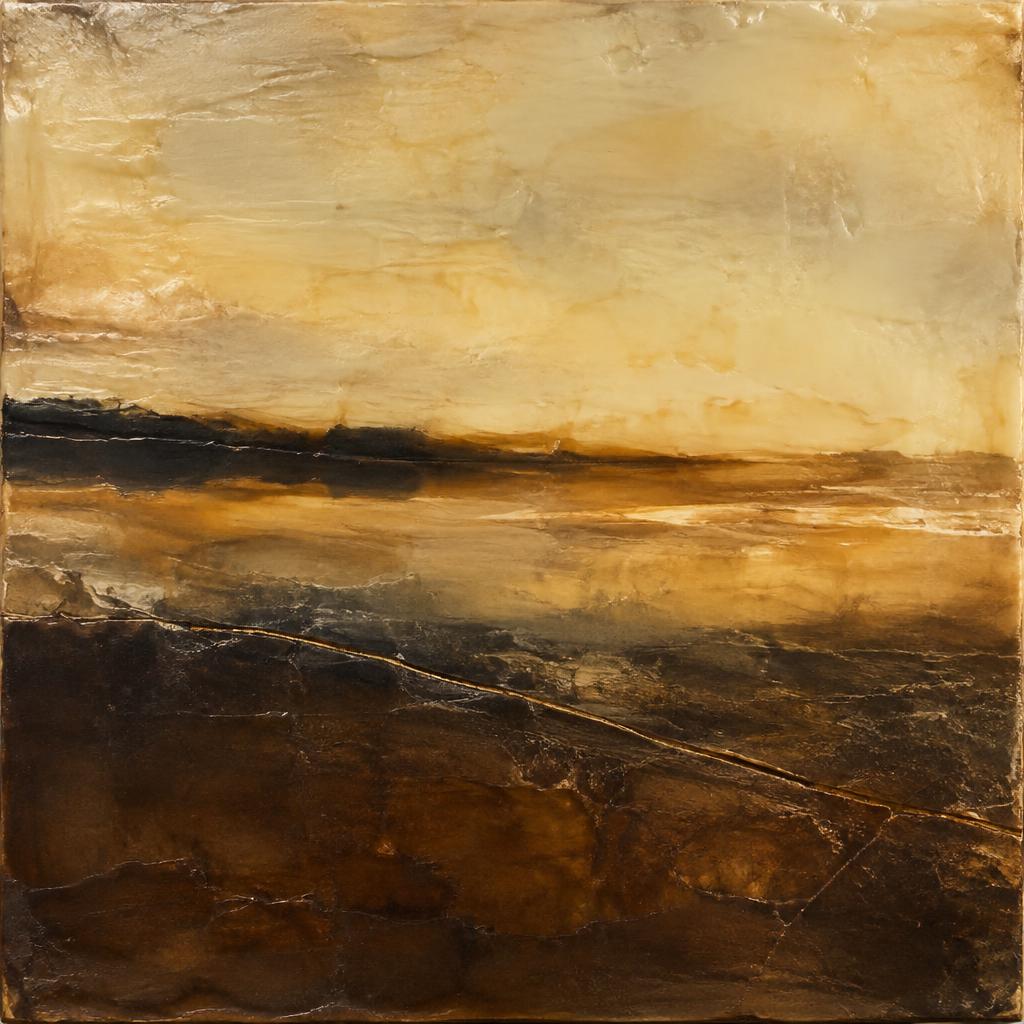
Look again at Stratum VII. The material is no longer a mystery. The image may feel different now.

Return to the piece →