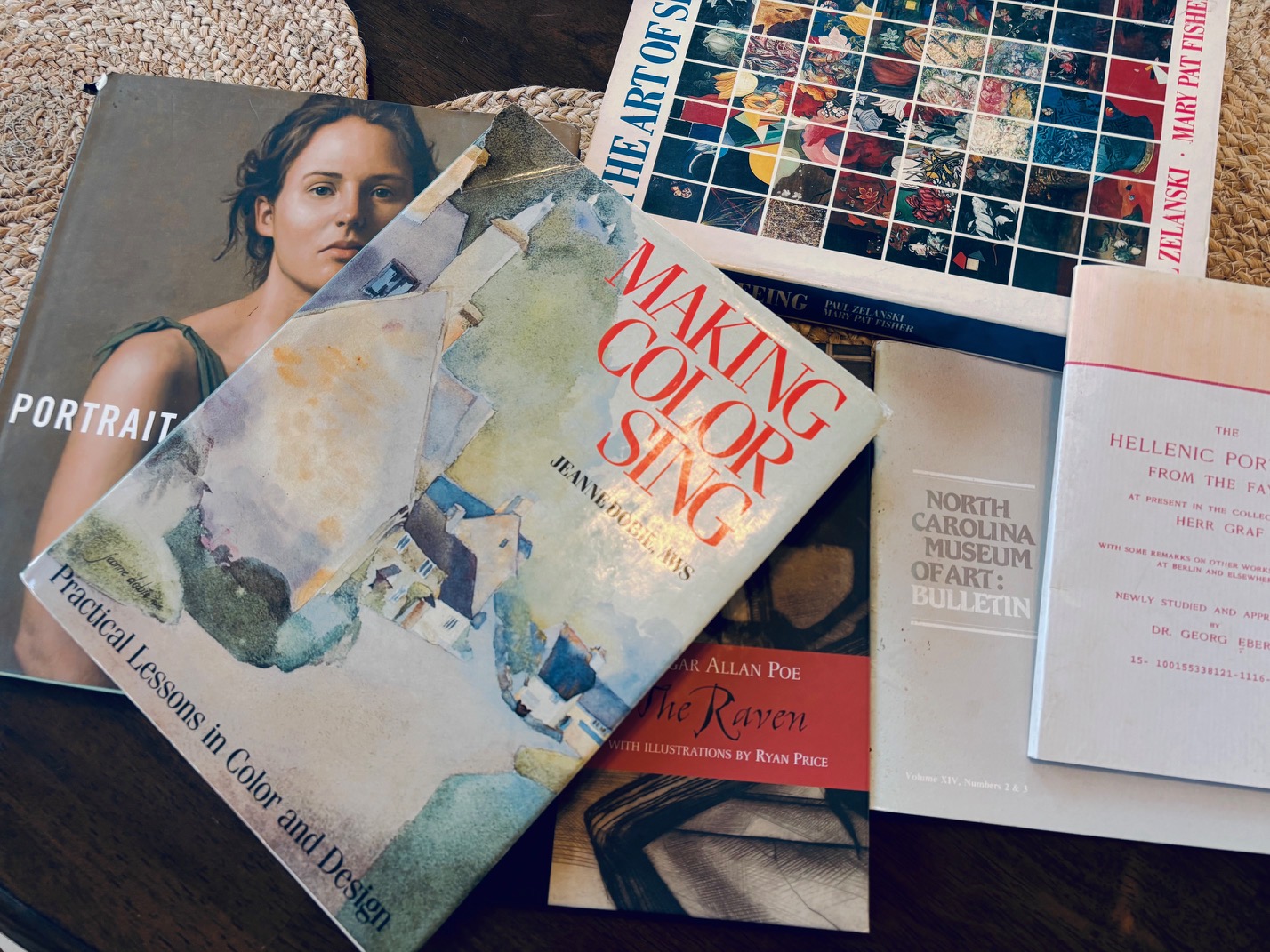
When I was learning the basics of art in college I was mixing my own ceramic glazes and testing them. One blue I was using kept pitting — forming small holes — during firing. My professor didn't know why. We drove together to a working potter, someone who touches the materials in production every day. He looked at my piece and immediately said, "It has too much cobalt in it." I said, "It can't — I got the recipe directly from an authoritative book." He said, "It has too much cobalt in it."
Later that week I visited the publisher's web page for that book. There were two corrections to the book on the site. One said the recipe I used had misplaced a decimal point. I was using ten times too much cobalt.
The value of knowing your materials intimately comes from working with them, developing a feel for them, and limiting your practice to as few materials as possible — known as intimately as possible.
i. Wax
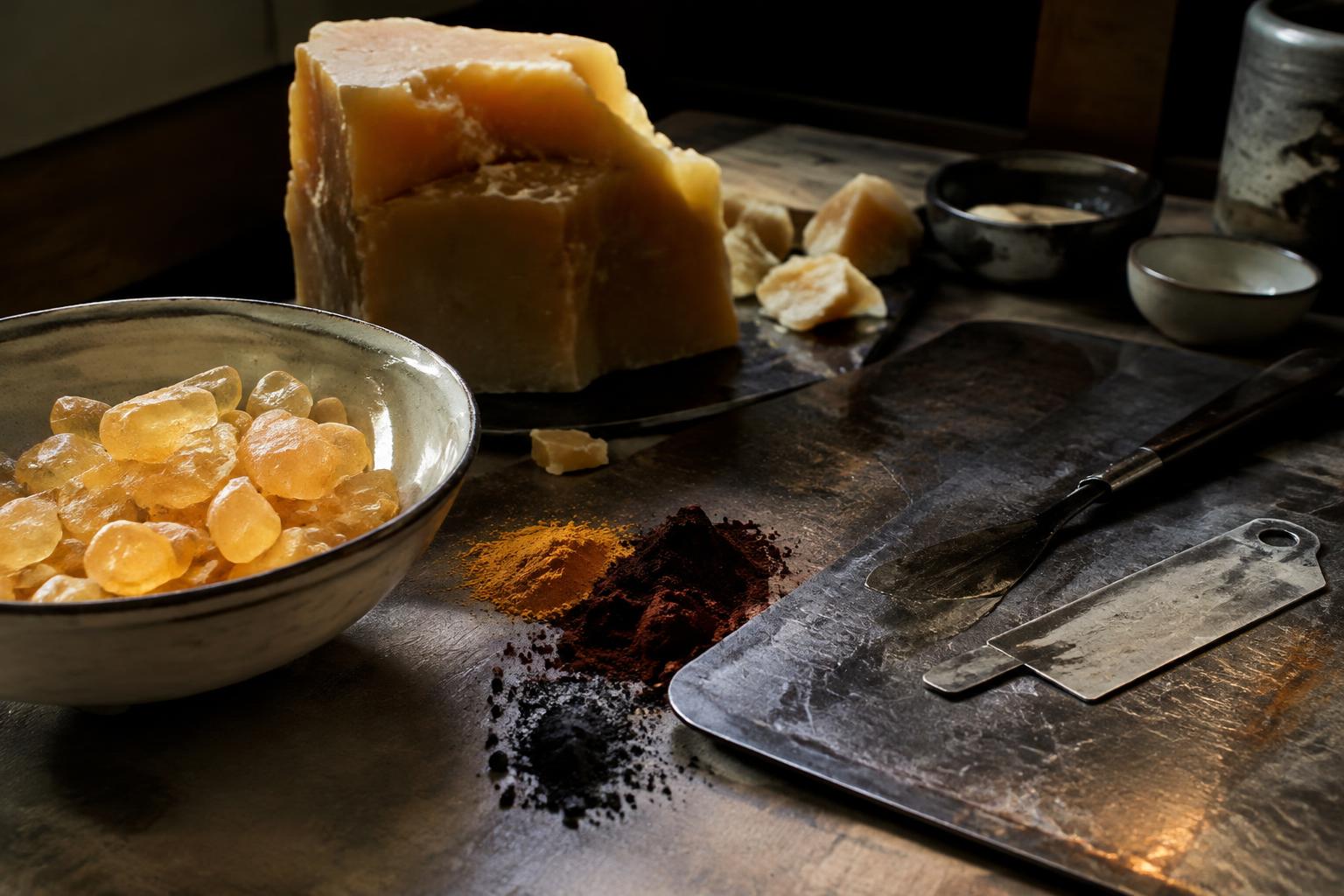
Beeswax is not one thing. Cappings wax — the seal bees lay over finished honey — is the purest. You will learn to know it by smell, by the way it cuts, by how it clouds when it cools too fast. You will learn to bleach it in the sun rather than with chemicals. What you put into the wax becomes part of the painting. Purity is worth testing, not merely trusting.
How do you know your wax is real beeswax? Much of what suppliers sell as “beeswax” is cut with paraffin, petroleum wax, or worse. So how do you know? In Good Will Hunting, Robin Williams’ character says, “I bet you can’t tell me what it smells like in the Sistine Chapel.” The same is true of wax: real beeswax smells of honey and pollen. If it smells of nothing, it isn’t what it claims to be. You cannot fake the smell of a real, natural thing.
ii. Resin
Damar hardens the wax, raises its melting point, and gives the surface its depth. Too little and the painting stays soft; too much and it turns brittle. The ratio is not a recipe you copy. It is a test you run.
Damar resin is produced by a tree, much like maple syrup. The best damar comes from Indonesia and Malaysia. I could buy mine from the big art distributors. I don't. To hold the exact same quality over years, I do what people who make scotch for generations do: I source from the same geography. There is nothing wrong with buying damar from a trusted supplier — but I import mine directly from one producer in Malaysia, generally enough to last the studio for years. I sometimes sell the extra to other artists who want to try it.
This is the same process encaustic painters have used for nearly 2,000 years. The more you connect to that history, the more connected you are to the materials and how you use them.
iii. Pigment
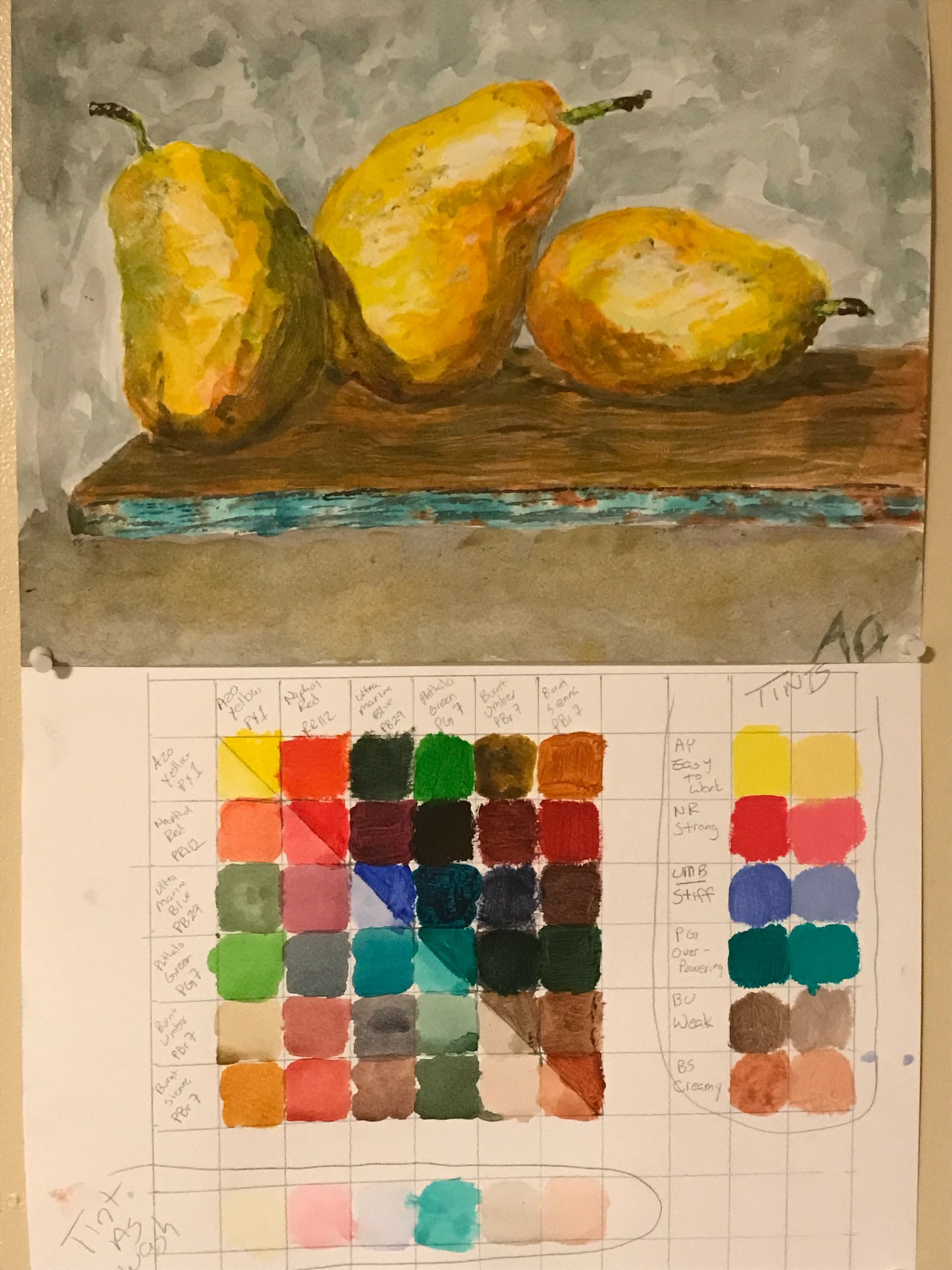
All art requires pigment, whether simple charcoal, stains, or ground pigments. The different media — watercolor, oil, acrylic, encaustic — use the same pigments. They just mix them into different carriers. The beautiful thing about encaustic painting is that we as artists can and should mix our own. This gives our studio its own breath, its own captive soul. Not a bought thing — a made thing, no different than the Renaissance artists who ground and mixed their own oil paints before paints came in tubes.
All pigments come from the earth. The less processing, the better. A professional studio has the right equipment to safely handle even the most difficult pigments. Once encapsulated into the medium, all professional pigments are safe, protected from the air, and will last hundreds of years, worry free, with the same vibrance as day one.
How is it that oil paintings crack and fade over time and encaustic pieces don't? The answer is that the other media continue to "dry" over time, losing their carriers. Encaustic never changes. Even though it feels hard to the touch, it is still alive. That is how paintings from 1,900 years ago still have the same vibrancy today.
Read the supplier’s safety data. Keep dry pigment out of the air, and use appropriate protection and ventilation. Intimacy with a material begins with respect for it.
“What you need to know about the next piece is contained in the last piece.”